Solutions
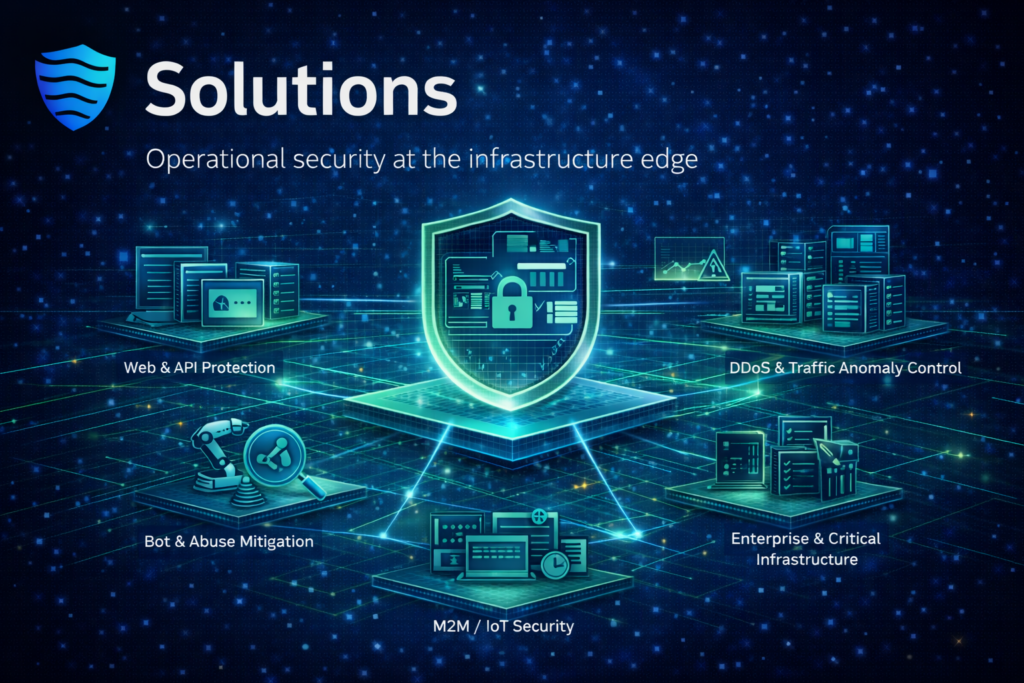
Quicksand is deployed where traffic becomes risk and risk must be controlled in real time.
Each solution addresses a distinct operational problem, enforced at the infrastructure edge and backed by verifiable evidence.
Security That Works at Your Edge
Modern applications face threats that evolve faster than traditional security can adapt. Credential stuffing, API abuse, application-layer DDoS, and sophisticated bots bypass conventional defenses designed for yesterday’s attack patterns.
Quicksand deploys protection directly at your infrastructure edge—no traffic rerouting, no third-party dependencies, no latency penalties. Decisions happen locally in microseconds while threat intelligence updates globally in real-time.
Choose the protection layer that matches your threat profile, or deploy the full stack for comprehensive coverage.

Web & API Protection
Modern applications expose far more than user interfaces—they expose programmable attack surfaces. Every API endpoint, webhook, and microservice becomes a potential entry point
for attackers. Traditional perimeter security wasn’t designed for this reality. Quicksand was built specifically to address these challenges.
Bot & Abuse Mitigation
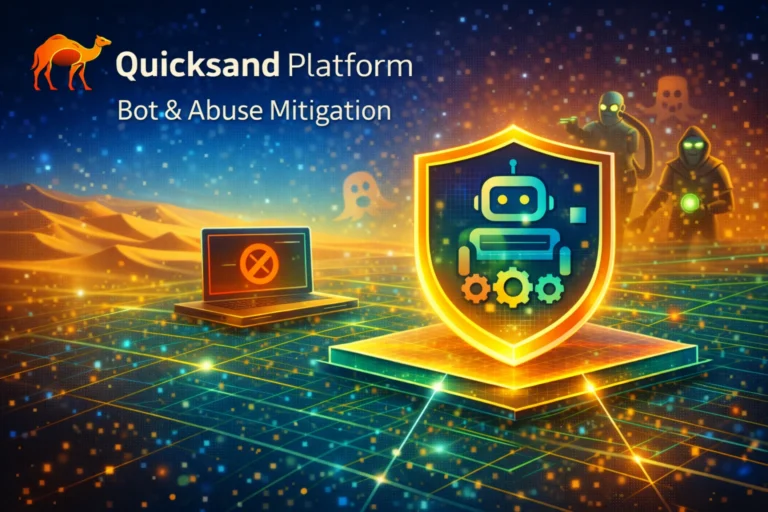
Bots do not behave like users—and signature-based defenses fail silently against them. Traditional detection relies on known patterns that sophisticated bots easily evade.
CAPTCHAs frustrate legitimate users while determined attackers solve them programmatically. A different approach is needed.
DDoS & Traffic Anomaly Control
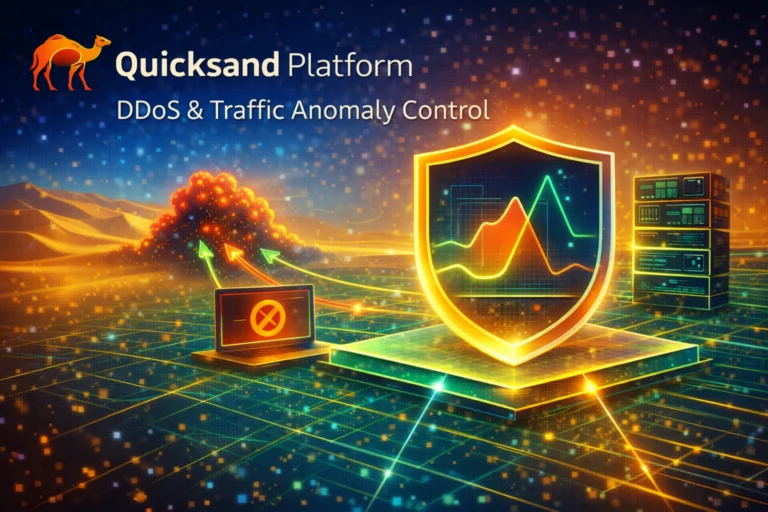
Availability failures are often preceded by detectable traffic anomalies. The signs appear before systems crash—unusual connection rates, strange protocol behavior, traffic from
unexpected sources. Most organizations only notice when services are already degraded. Quicksand is designed to detect and act on…

M2M / IoT Security
Machine-to-machine communication is predictable—and therefore highly defensible. Devices and services follow defined protocols. They call specific endpoints at expected
intervals. They send structured payloads with consistent formats. This predictability is a security advantage when leveraged correctly.

Enterprise & Critical Infrastructure
In regulated and mission-critical environments, security must be verifiable, predictable, and accountable. Auditors don’t accept “we blocked threats” as evidence. Regulators
require documentation of what was detected, how decisions were made, and why specific actions were taken. Security tools that operate…
Managed Service Providers (MSP / VAR)
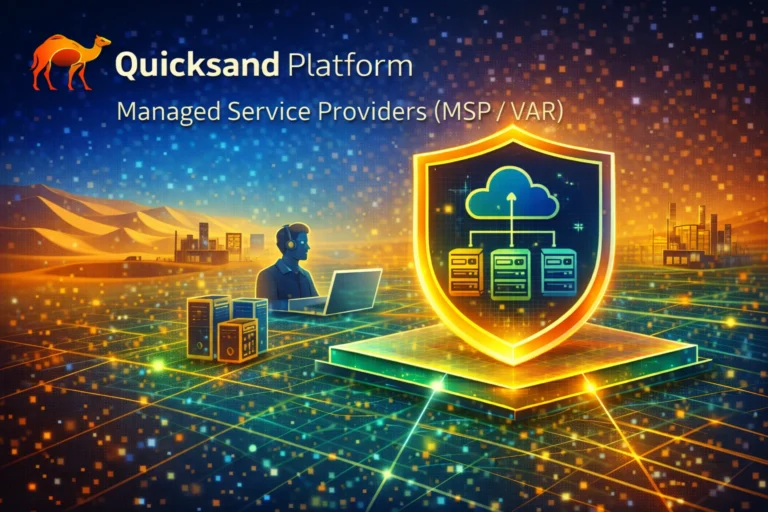
Security at scale requires centralized intelligence with decentralized control. Managing dozens or hundreds of customer environments with individual tools doesn’t scale. Every
new customer adds operational overhead. Every policy update requires repetitive manual work across tenants.